The Rottenbrough skatepark was finally a reality. And for a town known largely for its anonymity, it had proved an unexpected triumph. I'd watched the project take shape over the past eighteen months, suffering King's snorts when I asked the developer where they were putting the swimming pool. I never went overboard about the results anyway. The surface was coated with a non-stick substance guaranteed to unglue each rider from his board at the slightest movement, except of course, the 'cognoscenti', speeding around their designer bowls, and excuse me "pool". They could execute turns in the half pipe when we couldn't even slide from one side to the other without breaking our limbs; we stained the concrete with sweat and sent our boards flying from the Snake Run like missiles. The glory of the affair was short-lived however. By Christmas, skateboarding was entering its final phase. 'Skate-Rot's one moment of glory came in a dying issue of "Griptape", the industry monthly, where local hotshot, Lee Scallywag, got a flattering write-up, but for him, as for all who had nailed their colours to the skateboarding mast, it was too little, too late....A Sunday evening though. The smell of a bonfire in your lungs. The horror of the new school week looming ahead. Rolling up and down your twenty yard strip of tarmac. The decision to go out after tea scuppering any chance of feigning sickness. The tears in your eyes from the bonfire smoke. Or at least, that's what you would have claimed was the cause....your inability a secret of the night...Suddenly, you're thrown forward as the wheels hit a stone and your knees strike concrete, protected only by the pads that this night alone you chose to wear. Would you ride your luck forever...?
I knock at every door Darkness fell like a miserly shroud and we set off on our carol-singing expedition. Such compassion in the face of other's suffering. The rain began to fall. I had Derek, an umbrella, and two hymn books for company. It was November but a good idea wouldn't wait. My book had a huge drawing of a penis on the front. Our class had managed to intimidate 60 or so such texts from rivals through hushed threats in Assembly, so choice wasn't lacking, but at 3.30, my well entrenched guilt led me to snatch the first two to hand from the store room and stick them in my bag, exiting with the flushed look of the inexpert thief - a pretty standard look actually. "After three...One, two, three, "Silent Night, Holy..." Silence from Derek. Then a shriek of laughter and he was off. He'd got twenty yards before I was able to reach him and swear fully in his face. "You fucking bastard. You'd better do it properly next time!" "I promise...I promise!" pleaded Derek. But he didn't. The scenario repeated itself and eventually, I threw my hymn book at him, leaving it in the gutter, and walked off home in the rain.
Moves happen all the time when you're a youngster. Or I suppose they don't. We seemed to be constantly on the move. Though rarely very far. The great upheaval happened only once. The idea of going to live in a shop was presented to me with the smoothest of glosses and the wrench was altogether bearable. Living on the coast near the marshes, site of so many great English ghost stories, made the last year at Crablow wraith-like and bizarre to look back on. My news book is full of stories about mining disasters and cycling up alleyways, but I know I was going to ground, practically withdrawing from after-school society. The evidence belies the conviction. There I am at seven, surrounded by friends at my leaving party, the first signs of progressive era hair tickling my collar. Pop still hadn't quite penetrated our pre-junior school nostrils. If a drama teacher put the radio on, boys would still clutch each other and dance round the room an an ironic waltzing style. Still, I'd be up front, shaking it with the young ladies. What hopes that young teacher must have had for me. IRA bomb-scare evacuations were more our forte: or afternoons trapped in corridors by older kids, exciting in the sense that you pretended to be a prisoner of war pitted against the Germans, and escape was permitted by any means necessary. Blood stains on your knees the size of saucers. The wrong colour rosette handed out for a sprint hurdles victory was a travesty to match that of the Guildford Four. Stinging nettles and dock leaves. Daring to burrow under the fence and run and touch the climbing frame of another school. Continual daring, a little further, a little higher, and running away. Running everywhere. Running always, or on bikes. Skinny ones with legs like tree trunks. No long trousers in sight. Electrifying imaginary happenings that never took place, such as your first group practice on the bandstand at the age of six; winning poetry prizes, having your cap nicked. Strange days out on the marshes with the mires, and after you'd left, returning nine months later to find your friends playing up the alley as though time had stood still.
And now, a new town, a new dwelling. Creaky and older. Left alone as your parents worked downstairs in the shop. The terror to turn round bent over the bathroom basin. More so to exit those four square walls of light. Horrifying dreams of your father as a murderer The story of the former proprietor's demise in the passage leading to the shop, just behind the door that was always locked at night. And yet the security that existed within that brown walled chamber, watching Hadleigh or Bouquet of Barbed Wire. Hoping Pops would bring you something in from the shop after closing. Bolting up the stairs to your bedroom at night or jumping down them during the day. Another story of another staircase where he'd sat as a boy with next doors twins, projecting images from his father's cine-camera onto the front door interior. The fear of being caught, and then afterwards going downstairs and finding all the furniture in the living room turned strangely on its end. No explanation. And the cries and signing of hymns the next days as the elder twin was carried from the house, completely mad. The constant cold in the upstairs bedroom. No evidence of psychic activity this time. Merely a hard times disdain for central heating that made for continual movement and the early onset of cracking joints.
But the celebrity of living in the local off-licence, bettered maybe only by being the son of the sweet shop owner. Until a certain age when you overtook even him with your Bensons and Indian Pale Ale. No videos or intruding on each other's territories then. A meeting point which made for perfect eavesdropping on the local gang who's who. A castle's grounds to defend against wrongdoers, with barbed wire and snowballs and yards and yards of crates, wooden or plastic, cracked and cutting or alive with splinters, the leather gloves for heavy lifting jobs. Out of use, the ideal place for building all sorts of dens, hideouts, pit shaft cave-in reconstructions; advice bureaus. You name it. And then, after five years, a transfer to an up in the world 'semi', reachable by skateboard and luxurious for a year. Then, a year later returning to live in the same location. The day of moving back in; the great flood and frozen rivers of Brown Ale, Cherryade and Cider. Cresta botles burst open during the Christmas shutdown. It's a shopkeeper's life.
"Good game!" exclaimed Bruce Forsyth. And he was right. Games were good. Before drugs and video came along to keep the kids happy, if you wanted to have fun, you had to earn the right, spending ages memorising the instructions to interminable board games, or running round with toy machine guns yelling, "Dead!!" Cards were popular as well. The only people who play cards nowadays are students, hankering after a childhood they don't actually seem to have left behind ...But we were no technological retards either. 'Pocketeers' was the miracle of the hour: miniaturised, clockwork or spring-driven devices that mimicked the characteristics of grander board games or amusement arcade machines in a package about the size of a Galaxy, with sometimes equally addictive results....The tiny one-armed bandits I could take or leave, likewise the magnetised Formula One race-track, but my favourite waste of time was a silver ball bearing you had to dribble through a plastic maze while a twenty second clockwork motor slowly ran down. Magic! As for playground pastimes, traditional games like conkers were being eclipsed by a new generation of alternatively patterned and coloured marbles, up for competitive grabs for those prepared to crouch over drain-hole covers at breaktimes, numbing their fingers flicking them into saucer-shaped handle grips. On the sporting field, cricket was dull, dangerous and dauntingly supervised by fanatical teachers, but back home, a ping-pong bat propped against a front door, protecting an encyclopedia 'wicket' might offer hours of distraction as you sped down the hall to unload your spinning sphere. Weekends disappeared in a frenzy of kicking a ball against the wall of the garage, then I'd dribble a circular object around the carpet and 'Kung Fu' scraps of paper 'til collapsing in front of the telly to watch,'The Water Margin'. Sometimes darts came into fashion. '77 was a good year I remember. I was having a session with Terry when The Sex Pistols came on the radio: "The country's in a right bleeding state," said one. "What can you do about it?" asked the interviewer. "Make it worse," The Pistol replied. Perfect. What was the point in throwing darts or indulging in marathon ball dribbles when someone could target your anger in three seconds flat? Away went the dartboard once more.
Friday, 22 April 2011
Episode 5 The house that wasn't home
I was still staying in contact with a few Turrets acquaintances. Former five-a-side pal Garry had offered some relief from the horrors of Shrapnel the previous summer with his 'Evil Kenievel' and Scalextric', and when the second year at Shrapnel concluded, I was up early to make the fifty yard dash to his house, only to be told by his mother he was down the garage again with his step-dad, Garry was now a part of my junior school past. I turned and walked up the hill toward Terry's.
“...Wotcher.”
Things hadn't changed in Tel's terminally time-warped head.
“...Coming over the rec?”
I smiled, pleased to re-enter a less complicated universe. The days fell easily into a pattern with Terry that summer. With his 'Shoot' pull-out table and a series of rolls of the dice, we created our own alternative First Division battle, hoping to rouse our White Hart Lane footballing heroes from their coma with our voodoo. The thrill of repositioning the cardboard tag indicators a couple of places higher or lower on the table after the latest round of dice rolls would be enough to bring tears to my eyes. Then the equipment would be packed away in the drawer, to be retrieved only upon my calling next day.
While Tel's domestic life was other than blissful, most of the furniture having gone to pay his father's gambling debts, his garden was a bohemian paradise, brimming with unkempt paths and bushes from where I could spy on his stereotypically oppressed mother, stretched out on a lounger and offering her lean, cigarette-addled form to the sun. On August afternoons, the shadows cast by the trees lent an enchanted Shakespearean still to the occasion. As well as three dozen copies of 'Shoot', Terry leant me a pair of cricketing whites which I made sure I was wearing when Maureen was around. We were alone in the kitchen one day when 'Three times a lady' came on the radio. Maureen looked at me strangely and asked me what I thought.
I told her it was a load of soppy crap.
“...Aaah, just wait 'til you're courtin', Lennie!” she gushed.
I felt pleased she considered me capable of such achievements. In fact she was a little premature in her reckoning. But when I finally did get a girlfriend, I still didn't like slow discs.
Within a month of starting back at Shrapnel, my friendship with Terry was as if it had never existed. We never saw each other again and he never asked for his 'Shoots' back. It's not hard to see how kids like Terry go off the rails. I met 'dad' a few times. An unfriendly, desperate-looking man with a cockney accent transplantation reject. No wonder Maureen was always a bit valium-ridden and put upon. If it wasn't the strain of bringing up two kids virtually single-handed, it was the uncertainty of knowing whether she'd have a home in which to do so the following week. When I said goodbye to Terry that final weekend, I was leaving a world where I knew we could never be brothers. He was a good friend, but by October, I didn't really miss him. He put a sporting block on the reality of a life I couldn't relate to enough to sympathise with. Locked inside his football dreamland, where he would maybe one day make good, though he almost certainly didn't...
Playground justice existed at Shrapnel in the most base and corrupt form imaginable and meted out by murder incorporated: King, Kane and Heifer. This sham democracy obliged all concerned to participate in the infliction of violence and humiliation on those who'd transgressed playground sporting ethics - accidentally kicking a ball onto the roof of the canteen at lunchtime, for instance, or being the last to touch it on its journey, meant having to pass along a tunnel made up of the outside wall of the boys' lavatory and a line of press-ganged pupils, kicking and punching with varying levels of enthusiasm until the condemned man had completed his passage. The victim was allowed to counter attack, but this would simply work to the advantage of the three tyrants who would then have a real excuse to lay into them, though come their turn, few would risk such ferocity, confining themselves to a few feeble pushing and slapping movements, variously risking a smack in the mouth....'Bulldog' was another occasion for random unjustified violence. We had to admit, we quite liked this one. One boy would stand in the middle of the yard, charged with grabbing and keeping hold of whoever was trying to reach the other side of the playground. The individual caught would be obliged to team up with his captor and the next cross-playground charge would be that little bit more challenging. The last to be taken eventually won. Oh, and you had to shout "Bulldog!", like you were selling newspapers for the Young National Front. If you were seized, a short struggle was permitted which might lead to a few punches being thrown, usually by King, Kane or Heifer, who considered it a dishonour to be taken. Most memorable of all was the gobbing pit, a railed off area with a concrete staircase leading to the boiler room, into which the football would inevitably get booted during some mammoth breaktime session. The offender would then be obliged to retrieve the ball from the bottom of the steps, dodging a hail or trickle of mucus, depending on who it was, from those hanging over the railings. These vultures would then have to face the consequences of their actions as the victim re-emerged. Or not.
All in all, such injustices as happened at Shrapnel never occurred quite often enough to provoke the counter-reaction we all felt obscurely had to come. I remember being off sick once and learning on my return that the trio had challenged the class to a mass bundle. Only Seamus had showed up. And got a smack in the mouth for his troubles. I was almost crying with frustration. Here at last was our chance to put these bastards in their places. And it could have happened. If only I'd had a lunchtime to work on their psychology a bit. It could have been our Treblinka or Sobibor. But getting the 12 cowardly men to act on their own initiative was another matter. We were receiving all, a lesson in the psychology of dictatorship.
Generally speaking, the violence at Shrapnel was more organised than infant or junior school rumbles, which might involve half the school marching towards each other chanting 'Leeds' or 'Liverpool' and indulging in a bit of harmless push and shove. Except for the odd grudge encounter, most would emerge pretty much unscathed. I didn't take part very often. It seemed a bit wimpish to me. I was more likely to be found trying to form another club, something about which I had an obsession for many years. It's easier to face and maybe change people's thinking in a small group rather than with the weight of playground tradition on your shoulders, though I don't claim that as my main motivation. Alternatively, if your passion was for less planned activities, you'd simply walk around chanting the name of the game until attracting a sufficient number of individuals with whom you'd dutifully link arms and march towards the most promising-looking recruitment grounds in a kind of mobile rugby scrum. It was common to hear one word choruses of "War!", "It", and other attestations to man's inherently social nature.
It was the closing moments of the second summer of hate and we were heading home from our first family holiday on the continent. Songs from psychedelic era Pink Floyd filled my head, care of a second hand compilation received from Derek Bolus for my thirteenth birthday. Corfu had been strange. Wandering the mountains and hill paths, I saw nobody except black-clad women with bony-looking children and asses. I felt I couldn't wander off entirely and no one would ever discover my whereabouts. I lay beside the unfilled hotel swimming pool and dipped into Rick Wright's 'Paintbox'.
Last night I had too much to drink Sitting in a club with so many fools Playing to rules Trying to impress But feeling rather empty...
I didn't understand, but I knew what he was saying...
When I wasn't tanning my scars or wondering what damage I could have done to the pool had I remembered my skateboard, I'd be loitering outside the hotel bookshop. Waiting til the staff were distracted, I'd slip a copy of 'Logan's Run' under my shirt and steal away to the reading lounge where I'd tear breathlessly through the narrative, halting only where Logan was captured and forced to sleep with seven nubile androids.
The first orgasm was good
The second was all right
The third was bad
The fourth was agony
The fifth was damnation
The sixth...
At this point, Logan escaped both his bondage and the author's lexical capabilities, but I'd be forced to return to the beginning of the passage, to ponder again the scenario I might one day have to face...
Returning to the book shelf one day, I was seized by a Kaftan-wearing woman and forced to account for my 'literary borrowing'. The fact that I read at all was something to be noted in Rottenbrough. Not for nothing was I known as 'The Professor' (or 'Lennie Wanker'). but I managed to buy her silence only by offering to buy a copy of 'Dracula'. Christ, what kind of bourgeois image was I trying to portray here?
Memories of Shrapnel raced constantly through my head. I was on a five year survival course where keeping your head down was the only way to avoid having your self-esteem blown regularly apart. I'd occasionally smash a fellow pupil in the face to applause from assembled onlookers, but most of the 400 blows came in the opposite direction. Compromising situations came out of the blue, like an offender just released and looking for vengeance. I escaped the teen torments of acne and nosebleeds, but that just meant mishap, when it came, was unpredictable. Acceptance is all important in those formative years. Even if you'd prefer to turn your nose up at people on principle, the urge to compromise is overwhelming. When the acceptable face of bullying, Peter Heifer, told King I was his new best friend, I felt like asking him to marry me. It was the kind of relief that prompts hostages to offer themselves to their captors. By the end of the day though, the alliance was through...
'I felt his shimmering lips, hot breath and sharp white teeth. I closed my eyes and waited, in ecstasy..."
"And what do you call this this...!!?" raged my mother, the corporation estate lass turned middle England crusader. Christ, who needed religion with the guilt she foisted upon me? About my record collection; my mediocre school reports; what was lurking at the bottom of my bag; playing 'Grand Prix' with miniature Formula 1 models...
"I wonder how many other 12 year olds play with toy cars?"
Who gave a fuck!?
And so now 'Dracula'. Why couldn't she blast the motives of publishers prepared to print the juiciest passage on the front cover?
"If your father doesn't change his ways soon, there'll be a divorce!'
She'd thrown away her L-plates at the third time of asking and was ferrying me to school while Pops was out on a delivery. After the usual round of complaints about life at the shop and how he should be sorting things out for the better, she dropped the bombshell. I was stunned. For all her war-era mentality rationing of support and making me feel I was on trial every day of my school life, they were all I had. Every child needs to know they're important enough for their parents to bury their differences, at least until they're old enough to make a go of things themselves. For only children anyhow this statement holds true. I was hooked on their slow drip of affection and tearing it away seemed needlessly callous.
In truth, she wasn't having it easy. They were both overworked and she was suffering crippling migraines as the menopause kicked in. Six and a half day working week with no family to help; except me of course, and I'd get out of it when I could. Most kids would. Unfulfilled dreams. No wonder she felt the need to blurt it all out that afternoon. But sorry, I was a demanding kid. I needed that emotional support. No sisters, brothers or grandparents to turn to. A few distant aunts and uncles; My best friends fundamentally bastards, like myself.
On the Friday evening, we headed into the mountains. Father and I had hammered out a plan. I was going to see the excursion out at the hotel disco, with the young girl on the coach opposite me, if the scheme had any flexibility round the edges. Father favoured livelying it up down the road at the taverna we'd discovered a couple of nights before. Returning from the excursion, he was going to spend an hour or two getting the locals warmed up on the dance floor, cadge a lift back to the hotel, rendezvous with his sweat-soaked and beaming Sonny Jim, before ferrying us both back to the taverna with another lift he'd somehow organise. It sounded workable...
As usual, he was into his ever-ready stride before I'd tied my shoe laces. While he regaled the party with tales of putting coppers down manholes and playing 'Puk a Pu' with the Chinese in Whitechapel, I was stuck with a speccy git from Rochdale, who having lied continually about nuclear power, suddenly grabbed the water decanter and brought it down on an enormous spider crawling across the table, proceeding to slice off the intact half with his dinner knife. I went outside and found a toilet too disgusting to throw up in. I was not having a good night. Earlier that evening, Pops had rounded up a group of local boys and organised them into football teams. He'd called for me to join in, but I'd kept my distance, convinced my affluence was an insurmountable barrier to our association and worrying subsequently they'd think I was stuck up.
We made it down from the mountains with the sun still hovering over the horizon, but for some reason the disco had was closing that evening, and suddenly nobody wanted to follow the 'Limehouse Kid' down the road to the taverna. Tomorrow it was back to Rottenbrough and our miserable meat and two potato lives. I fell asleep to his haunting, 'What a bloody washout!" lament.
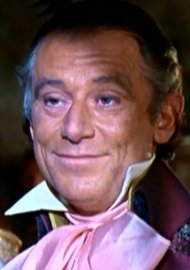
And the crowd stirred restlessly in the market place. A piece of debris from the television universe had fallen in our midst, bathing the precinct in an eerie showbiz glow....It was Patrick Cargill of sitcoms, sideburns and large sheepdog renown - come to shoot a commercial. But Patrick's televisual sourcery would not prosper today. I won't believe that anywhere other than Rottenbrough, Parick's turn wouldn't have proceeded successfully, but as he paraded before the great ape gathering, there was an ominous rumble and a few minutes later, the longest drought in British history came definitively to an end. Patrick marked everything we were fashion disaster-wise at the time; all things wide and pseudo-Dickensian. Bright colours and pop art were generally more of the Sixties. Only Seventies jet-setters and rock singers really dressed Glam. From Patrick on down, everything was reined in colour-wise to beige, grey, crotch-stain and Bisto. In tandem, the unnecessary expanded and grew. Big cufflinks, bigger sideburns and wristwatches like gongs. Just over the horizon lay Patrick's descent into afternoon nostalgia programmes and panto, but as we scrambled for shelter amidst the downpour, for a moment at least, we were spared the truth of our fates.
Rot Follies
How did Shrapnel fashion us? What were its designs? Seamus saw merry, slamming his chair into Suzie Chewitt's desk in simulated sexual intercourse. Kane interrupted his 'C'mon then!! and 'Skiiilllllll!' blatherings to comment. 'Weisman's the only one of youse 'ard enough to 'ave a go at me....coz e's a maaaaaan! Kane was somebody I loathed instinctively. I know most people didn't like him much, but on a personal level it really went deep. His ignorance, cunt-like nature and lack of need to do anything about it really rankled. He was kept in check only by the even more pyschotic figure of Shane King, and for the sake of our sanities he should really have have been excused academic duties from the start. Inspired by the burgeoning Punk movement, I penned my first pubescent protest number.
(To the tune of 'Gary Gilmoure's Eyes' by The Adverts)
We hate the National Party
And we hate the National Front
We hate the Labour Party
and we hate the Liberal cunts
We hate the Tory party
And we wish Maggie was dead
I think I'll put my DMs on
And kick her in the head...
Not the most articulate statement, I know, but politics was in a pitiful state by the mid-Seventies. Skinheads came out of nowhere and quickly dominated the streets. Looking back, it's hard to pinpoint a precise moment. The Queen's Silver Jubilee perhaps? But some boys always had crops. Borstal was probably the biggest influence: Violence was always in. The National Front came as part of a trilogy with the New Wave and skateboarding during the first eighteen months at Shrapnel, but Anti-Nazi rallies were a long way from our playground ordeals. In the natural instinct that always made me mistrust Socialist Worker types, the biggest factor was their complete failure to do anything about the fascist elements in our midst, leaving it up to a few brave or crazy boys to speak out, at immense personal risk. The extent to which these zeros were prepared to put themselves on the line was mirrored in the mob-like violence of the miners in the mid-eighties and the mindless anti-American prejudice of NME writers today.
.
Sunday, 20 February 2011
Episode 1
78 Crash
You were no one ‘til that
moment Mervyn Peters. Another pudding basin pleb in second-hand flares and
platforms until the day old Lou’s ice-cream van lured you through the school
gates into the path of the speeding Ford Corsair. But twelve months on, just see how
your stature has grown! Now when teachers mention your name in assembly, we
must stare hard at the ground and force ourselves not to laugh. Local papers
print pictures of your patched-up return to the old school yard. Some are born
great. Others have it driven into them. And I hear no complaints from
your quarter. Every time I see your wobbly walk and unnerving, etched on smile,
it heads a gaggle of gum-chewing girly admirers, all gone doolally over
their mobile cabbage-patch doll.
I’ve never actually spoken to
you of course. I feel a little uncomfortable around a legend. I’d rather mock
you from a distance. I can’t really see anything to be cheerful about, and I’m sure
you felt the same before the Dagenham dustbin rearranged your features,
so if you’ve finally seen the light, or found some comfort in the darkness, I’d
rather not have the good news beamed in my direction. At least not til I'm clear of Shrapnel Park.
Give us the child
I'd never taken primary school very seriously. To me it was just a way to keep you from indulging in random or accidental acts of destruction while your parents strove to keep the domestic ship afloat, and once you'd proved you weren't a complete menace to society, there didn't seem much point in going, except of course, for the social aspects, and that's where most of us focused our attentions. Yet taking my leave of Turrets in the summer of '76, I knew I was saying goodbye to paradise. No more five minute strolls home at lunchtime, no more friendly, first name terms overseers. When September arrived, a three mile bus ride through enemy school territory would be your daily challenge. A swag-bag of hysteria-inducing homework your reward. On the first day of internment, Mr Flaherty set out our mission: the five year struggle to the top of the Comprehensive School educational tree: followed swiftly by the post-exam boot out of the nest to join the CSE pack milling around below. He meant it kindly, but he really needn't have troubled himself. I wasn't going within a mile of Fords or any Rottenbrough motor trade hell hole. Not in a million years. I'd got my sights set on white collar land where codes of civility undreamed of at Shrapnel Park had somehow taken route. My piss-take of his paternal advice did little to convince him that he wasn't in fact my worst enemy. Those I genuinely feared and detested were my contemporaries, and the superhormonal stew in which we'd been left to simmer for the last five years. After a short signing-on break, they could continue polishing their intimidation rituals at the sweatshop of their choice. I was going somewhere with sociable women office workers. That's if I was going to work at all. For while, those who read newspapers might be persuaded that riots and rising unemployment made career opportunities a rarity. It was a charter for the feckless. The always unreal horror of adulthood might perhaps be staved off a little longer. Further education as a means of postponing the inevitable still hadn't occurred to me. Perhaps it seemed too transparent a form of skiving.To refuse to participate in a system that had never advertised itself as anything other than purgatory seemed defensible. To pretend to be interested in chemistry or domestic science for another couple of years was simply dishonest.
The drought
Two others were swapping the security of Turrets for Shrapnel Park that summer. Seamus Weisman, a gnome-like Wheeler-dealer from Walthamstow, and Solomon Woodlouse, his permanently nervous eager beaver pal. Wandering through Rottenbrough, the spectre of the new term looming before us, we'd catch glimpses of others who, like ourselves, had only recently climbed to the summit of the primary school mountain. How quickly our moment in the sun had passed! That summer had defied predictions on both the sporting and meteorological fronts. As native flesh basted itself in the hottest summer of the century, we raced around the parks and recreation grounds in imitation of our Montreal Olympic heroes. Except this time we won. 1976 saw the first flowering of my infatuation with English athletics. The nobility of these unending no-hopers. Even the hotly tipped. I never believed in them for a second. Their failure was as much stamped upon their charity-funded running kit as it marked our nation's economic decline. All that sweat evaporated though, pooling somewhere above our island nation. Sooner or later, the drought had to break...